Machined Components for Medical Devices and Instruments
Machined instrument bodies, equipment components and non-implantable device parts with FAI and material traceability. Implants are out of scope.
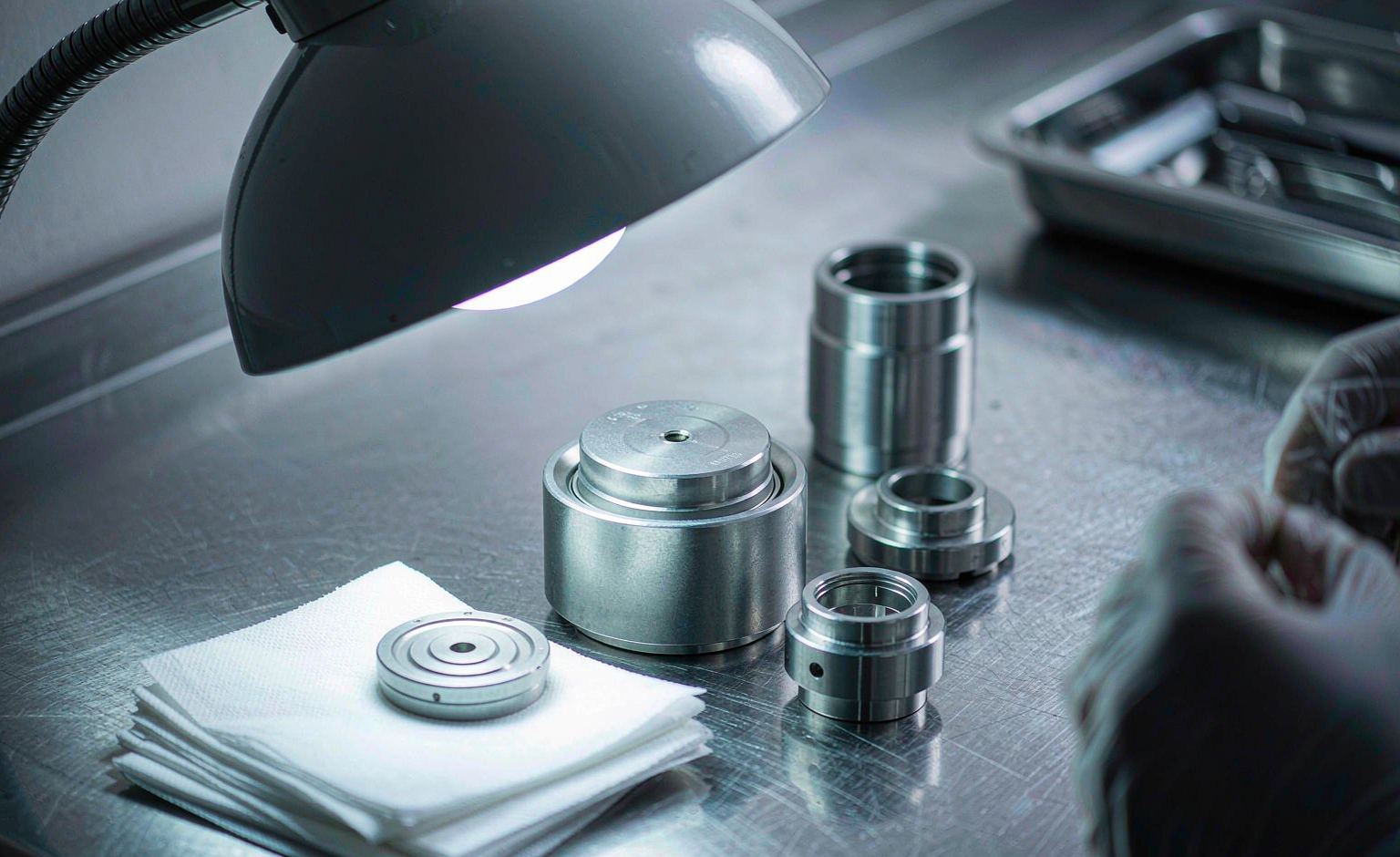
Medical device machining requires material traceability, documented process control and surfaces that resist corrosion and cleaning. Xinyuanmu Precision machines instrument bodies, housings and equipment components in stainless steel, titanium and engineering plastics, with first-article inspection, material certificates and heat-number traceability, limited to non-implantable, non-patient-contact parts under our current quality system.
Scope of supply in this sector
We produce instrument bodies, housings, surgical-guide bodies, equipment sub-assemblies and non-implantable device enclosures. We are not a contract steriliser and do not manufacture implantable devices; those require a validated cleanroom and clinical-grade process validation outside our current scope.
Requirements
| Current scope | Non-implantable, non-patient-contact parts |
|---|---|
| Materials | 316L, titanium Grade 5, PEEK, 6061-T6 |
| Traceability | Material lot to finished part on request |
| Documentation | FAI, material cert, dimensional report |
| Quality system | Documented inspection; certification in progress |
Materials we machine for this sector
- Stainless steel 316L (low-sulphur where specified)
- Titanium Grade 5 (Ti-6Al-4V)
- PEEK and medical-grade engineering plastics
- Aluminium 6061-T6 for non-contact components
Applicable standards
- Material certification and heat-number traceability on request
- Passivation per ASTM A967 / AMS 2700 for machined stainless
- Customer drawing and GD&T per ASME Y14.5 / ISO 1101
Typical parts
- Instrument handles and shafts
- Device housings and enclosures
- Surgical-guide bodies
- Equipment sub-assemblies
- Sensor mounts and optical benches
- Sterilisation-tray inserts (non-implantable)
Quality risks specific to this sector
These are the failure modes we see most often in this industry. They are listed because knowing them before design review is cheaper than discovering them at first article.
- Free-machining stainless such as 303 embeds free iron that pits — 316L is specified where corrosion resistance matters
- Coating growth on bores and threads after anodising or plating can consume tolerance — accounted for at DFM
- Implantable or sterile-barrier work is outside current scope and referred to a specialist partner
Compliance and capability questions
Are you ISO 13485 certified?
Not yet. We operate a documented inspection and traceability process — first-article inspection, material certificates and heat-number traceability — and are building toward formal medical-device quality certification. We are transparent about which documents we can issue today.
Can you supply implantable components?
No, not under our current scope. We machine instrument-grade and equipment components, and refer implantable or sterile-barrier work to a specialist with the required validated facility.
Do you provide full material traceability?
Yes, from mill heat number to finished part on request, retained and retrievable by part number and lot.
Industries we also supply
Semiconductor Equipment
Semiconductor equipment manufacturing requires components with tight tolerances, stable materials and clean handling so that wafer-handling, inspection and process tools hold alignment and vacuum integrity. Xinyuanmu Precision machines structural, vacuum and optical-mount hardware from aluminium, stainless and specialty alloys, with first-article inspection, material traceability and packaging suited to the tool environment..
View sectorPhotonics & Optical Communications
Photonics and optical-communication systems depend on mechanical parts that hold lenses, fibres and optical sub-assemblies in alignment. Xinyuanmu Precision machines mounts, housings and structural frames from dimensionally stable materials to tight tolerances, with surface finish and clean handling controlled so alignment and stray-light performance are preserved..
View sectorHigh-Reliability Industrial
High-reliability industrial equipment — automation, instrumentation, test and measurement — needs low-volume, high-mix parts where design iteration speed and repeatable fit matter more than unit cost. Xinyuanmu Precision machines brackets, fixtures, end effectors and instrument hardware in short lead times, holding mounting-interface tolerances so parts from different batches assemble without rework..
View sectorSend drawings, get a review and a quote
Send a STEP file and a 2D drawing. You get a fixed-price quotation with lead time and a written DFM note — no obligation, and no sales call unless you ask for one.