CNC Milling from 3-Axis to Simultaneous 5-Axis
CNC milling from 3-axis to simultaneous 5-axis for complex prismatic parts. Single-setup machining to control tolerance stack-up, DFM review included.
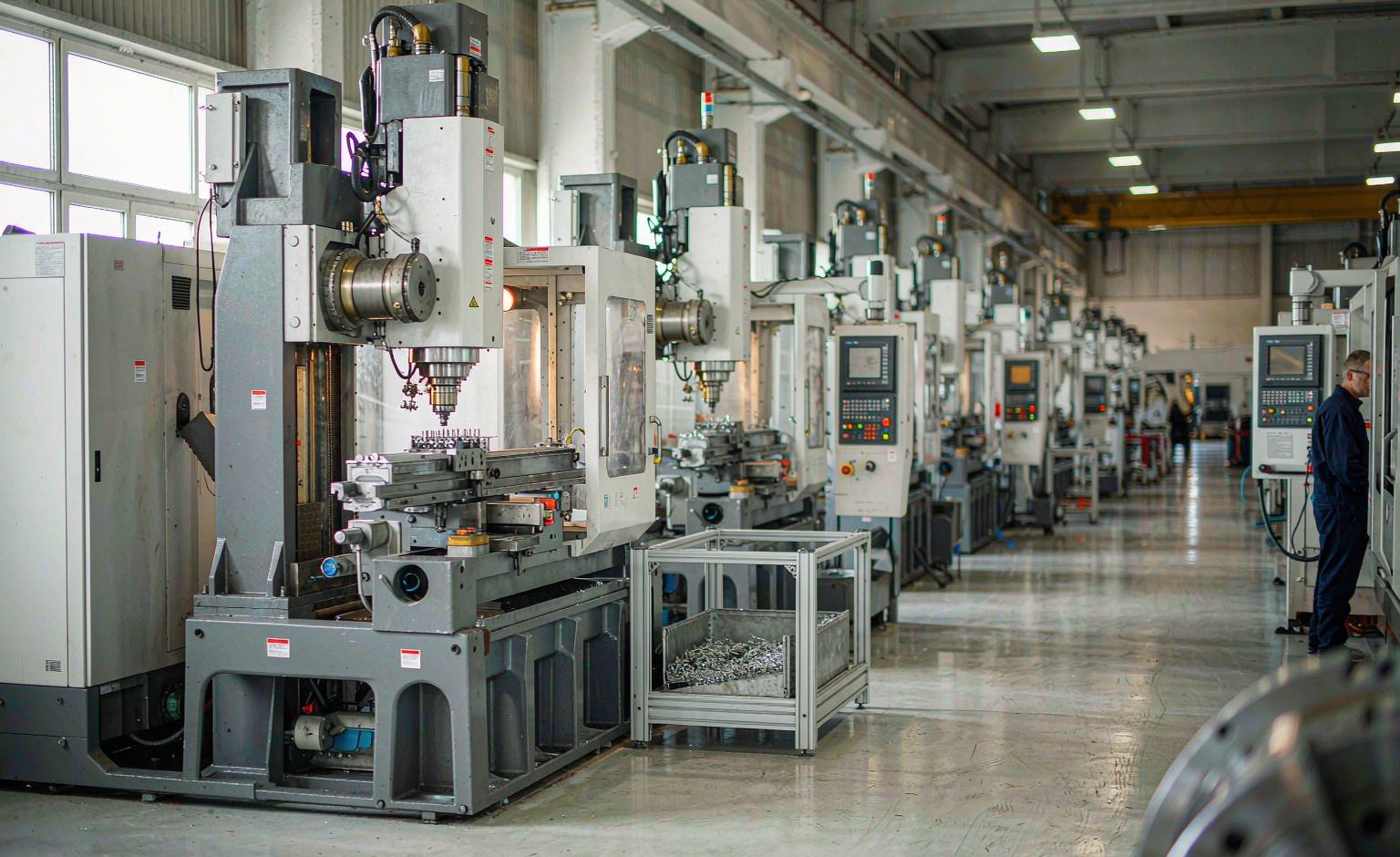
CNC milling removes material with a rotating cutter on a computer-controlled table. Xinyuanmu Precision runs 3-axis, 4-axis and simultaneous 5-axis milling, allowing complex prismatic parts and multi-face features to be cut in fewer setups, which reduces tolerance stack-up and the handling that drives cost.
When this process applies
Milling is the right choice for prismatic geometry: plates, brackets, housings, manifolds and fixtures with pockets, contours and holes on multiple faces. For purely rotational parts, turning is usually cheaper.
Technical specifications
| Axis capability | 3-axis, 4-axis, simultaneous 5-axis |
|---|---|
| Tolerance (general) | ±0.05 mm typical |
| Critical features | Tighter bands confirmed by FAI |
| Surface finish | Ra 0.4 µm achievable |
| Typical materials | Aluminium, stainless, titanium, plastics |
Where it is the right choice
- Plates, brackets and housings with features on several faces
- Contoured or contoured-and-pocketed parts
- Parts where stacked tolerances would otherwise accumulate
- Prototype through small and mid-batch production
Where it is the wrong choice
Stating this explicitly matters more than a capability list: if your part falls into one of these categories, another process will cost you less.
- Purely rotational parts — turning is cheaper and more accurate
- Parts requiring material removal above ~60% of billet volume; a near-net blank reduces cost
- Very large parts beyond the machine envelope
Equipment
- Vertical and 5-axis machining centres
- CAM verification before the first cut
- In-house fixture design for single-setup machining
Process questions
When does 5-axis milling beat 3-axis?
When a part needs three or more setups on a 3-axis machine. Each setup adds fixturing, handling and a tolerance stack-up; once a 3-axis part needs four setups, 5-axis usually wins on total cost even at a higher hourly rate.
Does 5-axis improve accuracy or just speed?
Both, but accuracy is the larger effect. Machining critical features in one setup removes the repositioning error that dominates tolerance stack-up on multi-setup work.
Related capabilities and products
Tight-Tolerance Machining
Tight-tolerance machining is the discipline of holding critical dimensions repeatably rather than cutting a small number once. Xinyuanmu Precision machines hardened and specialty alloys such as SUS440C to demanding tolerances by controlling datums, separating roughing from finishing, and verifying every critical feature by first-article inspection..
View capabilityDFM & NPI Support
DFM and NPI support means reviewing a design against the constraints of machining before release, and carrying it from prototype to small-batch production. Xinyuanmu Precision returns a written DFM note with every quote and tracks each engineering change by revision so a part made last year can be reproduced exactly..
View capabilityKnowledge Base
Tolerance tables, cost mechanics and DFM rules written for buyers rather than engineers.
Read articlesSend drawings, get a review and a quote
Send a STEP file and a 2D drawing. You get a fixed-price quotation with lead time and a written DFM note — no obligation, and no sales call unless you ask for one.